Google tag

Showing posts with label Haiku. Show all posts

Friday, 14 November 2014

Saijiki, Glossary of seasonal words for Haiku / 7 July 2012

Saijiki of Haiku 

TANAKA Akio 


Saijiki is the glossary of seasonal words for Haiku composers with illustrative verses. I have read it from my youth and recently I have realised one important fact that the reading style of the saijiki is one of the best ways to read, understand and enjoy the books, in which one is interested. The way is the following mentioned.
Saijiki is classified by the five seasons; the new year, spring, summer, autumn and winter. The each season is further classified by the three small seasons; early, middle and late season. Under the small seasons the glossary of seasonal words are arranged by the classification, such as plants, animal, foods, folklore and so on.
The reader read the most concerned words freely and easily. at that place word's seasonal meaning and illustrative Haiku are describing. This example Haiku is so interesting and sometimes fantastic, because one can fly the different season, time and folklore by one's interest.
So recently I realised that I can read mathematical books alike Saijiki
Many theorems, corollaries and lemmas are alike the glossary of the saijiki. I read them freely and adopt one of them for my study just as one seasonal word is adopted for the composition of Haiku at that time.

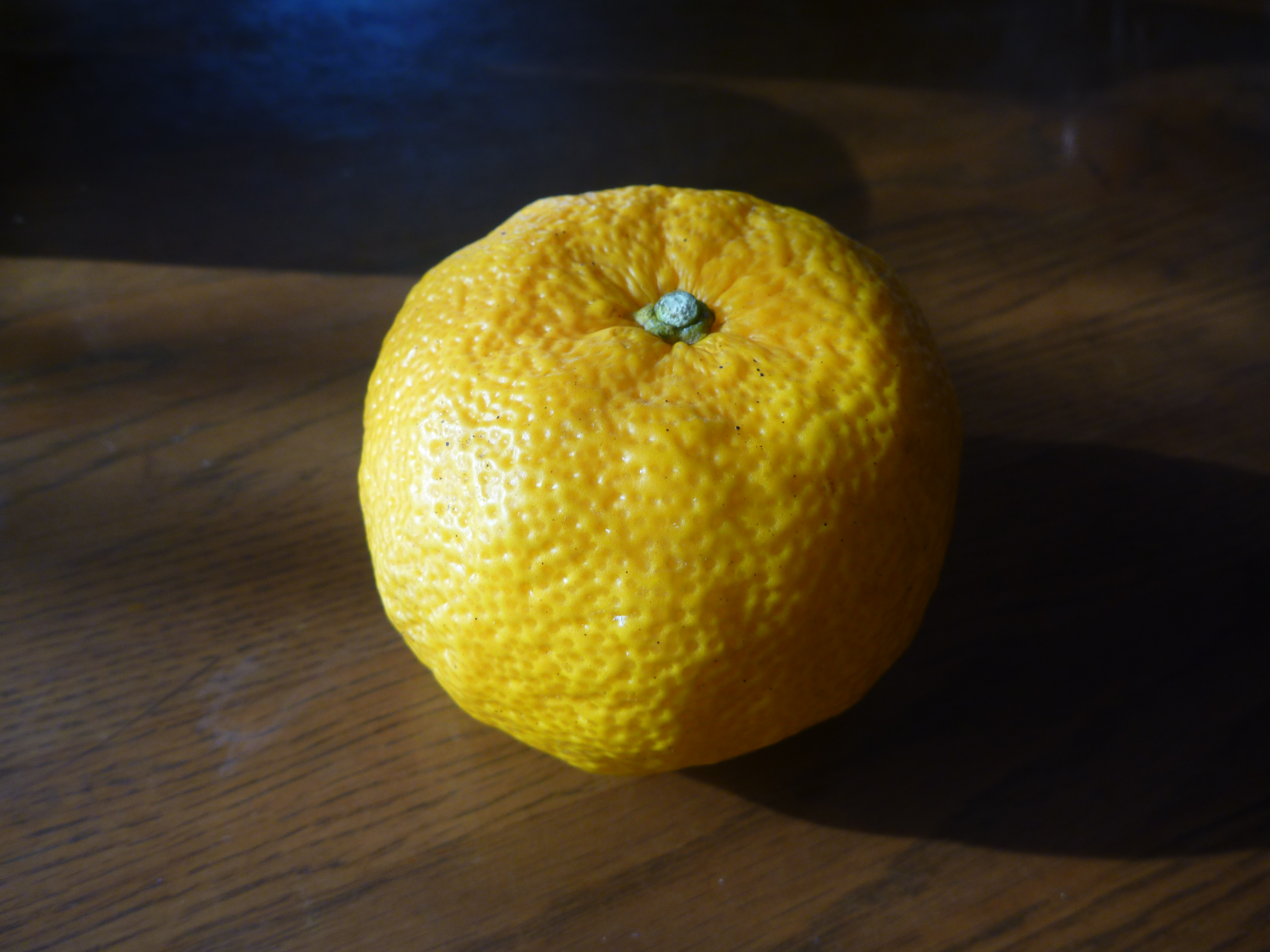
Haiku for the winter solstice / 22 December 2011

Haiku for the winter solstice

風窓を
揺する遠き日
柚子を切る
Kaze mado wo
Yusuru Tooki hi
Yuzu wo kiru
Wind joggles the pane
The days gone afar
When I cutting the citrus fruit
TANAKA Akio
22 December 2011
For the winter solstice
P1110424
Citrus gifted from the acquaintance for winter solstice.
In Japan we have a citrus bath in the winter solstice day
thanking and hoping the old and new year's health. 

Tokyo
Reprinted at 14 November 2014
SIL

Monday, 10 November 2014

Symbolism of Japan, Haiku / 4 July 2012

Symbolism of Japan, Haiku 

TANAKA Akio 

4 July 2012
               
                         
Haiku is the traditional Japanese literature since the Meiji Period some 140 years ago, the ancestor of which was called Haikai that was began in the Muromachi Period some 500 years ago.

I have made Haiku since age 20s. My Haiku's teacher is SAEKI Shoichi, one of the modern Haiku writers in Japan. SAEKI's teacher is probably ISHIDA Hakyo, famous Haiku writer in the Showa Period. Thus the tradition of the literature has been inherited to me.

One of my youth age's Haiku, at Tokyo, February 1970, is the following. I love this Haiku for my poor but inner delight.


                     Pantagurafu tsumetai sukimade hakkosu
<Translation>
Pantograph  
At the coldest clink 
Radiates light for me

Tuesday, 28 October 2014

A trace of student who has been enchanted with language and mathematics / 28 October 2014

A trace of student who has been enchanted with language and mathematics

TANAKA Akio


What have you thought being enchanted with mathematics?
It is hope that is given to every person. For me It is mathematics. It can describe almost every thing on language if I do not give up and pursue on. (This part added at 16 November 2014)

Preface

  1.  Symbolism of Japan, Haiku / 4 July 2012  This simple form of poem seems somewhat giving  influence of my thinking style up to now.
  2.  Now I am Enough Old for Remembering the Past / 27 September 2012
  3. Nikolai Ostrovskij’s novel, How the Steel Was Tempered 1936 / 20 June 2013

1.
  1. Andre Martinet / 16 July 2012

Tokyo
28 October 2014