Google tag

Wednesday, 26 January 2022

Sekinan Geometry Index 2020

 Sekinan Geometry Index


Sekinan Geometry Index was made for overlook the work of Sekinan Library from 1986 and SRFL from 2003.
The work began at the analysis of Chinese characters, especially their ancient form called Jiaguwen in Chinese, now simply  called Characters inscribed on tortoise shells.
The analysis is made under the vast historical heritage of chinese character study called Xiaoxue, Small Study in English.
Xiaoxue 's backbone is phonology of Chinese characters succeeded from Shijing, The Book of Odes in English, some 2500 years ago.
Xiaoxue's peak is Qing Dynasty 1616-1912, as almost all the researchers that learn Chinese classical language.
In 1973, age 26, I met with WANG Guowei's Selected works of him, titled Guantangjilin at bookshop, Haifeng Shudian, Kanda, Tokyo.
In 2003 spring , I wrote the fist paper related with Xiaoxue,  On Inherent Time in Characters and in summer succeedingly wrote the first theory, Quantum Theory for Language, and in winter which was read at the International conference on Silk Road at Nara Prefectural Public Hall, Nara, Japan. At that time I already became age 56. It was the real start of my study, going on till now, to the root of language.
The present themes are Energy, Signal, Nerve, totally through geometry that has been always with me, that incessantly presents me the most fantastic treasures from this great nature.


Tokyo
13 August 2020
Sekinan Geometry Index


On Structure Revised 2009-2015


On Structure Revised


Symplectic Language Theory

TANAKA Akio

Dialogue 1
On Structure
For HORI Tatsuo, Footprints on the snow, 1946

Why do you think that language has structure?
_We have true-false problem since Greece had logic on language, Crete man tells himself a liar. The situation suggests that if language has structure and we see the structure’s whole, there is no more problem in the upper funny but radical story.

Do you mention that language has dimensions in it for preventing the confusion?
_Surely dimension is an important factor of structure. But language is a vast building in which all the logic and all the feelings are expressible for all the hope of human beings.

Then how the structure is built, do you imagine?
_I ever learned the history of Linguistic Circle of Prague, in which the most important hypothesis is said that language has function. Function is inevitably occurred following after the completion of structure, I think.

Do you say that from the observation of language function is adequately acceptable for structure’s surface?
_Yes, I think so.

Then on inner structure of language, what do you think?
_At first, language has meaning. But it was put aside by Prague Linguistic Circle as the hardest problem on language for its ambiguity as MATHESIUS V. gave the famous lecture, Latency of language phenomena, 1911.  I attracted the theme, language has ambiguity.

Did you go to Prague?
_No. I only heard on PLC from CHINO Eiichi. He learned linguistics at Prague, from 1958 to 1967. He gave me the basis of linguistics after his returning to Tokyo. I first met him at Tokyo 1969. I learned Russian at that time in the small class. He was young at 37, and I also young too at 21.   

You really respect CHINO.
_I remember him respectfully, but more frequently merrily, for his fantastic conversation to the younger beginner, studying language from various fields, from art to classical languages at the university. 

On language, ambiguity is important?
_Undoubtedly. CHINO gave me the concept of asymmetric dualism of linguistic sign. The paper was written by KARCEVSKIJ Sergej at 1929. Precisely to say, “Du dualisme asymétrique du signe linguistique”, Travaux du Cercle Linguistique de Prague 1.

From ambiguity to structure, through what course did you choose?
_I took the road from the minimum unit of meaning that was extracted by WANG Guowei‘s GUANTANG JILIN, the book was real youth of my life, for which I named <meaning minimum> by reference of JAKOBSON Roman‘s concept <semantic minimum>. I dearly remember CHINO’s warm advice “not to enter such a theme that are firstly treated by WITTGENSTEIN-like person. We are not invited”, backing to the railway station from the university, after his lecture on linguistics at early summer twilight. 

<Meaning minimum> is your starting point, I recognized. After that, To where did you go?
_At first, from set theory. I ever learned it mainly from TAKEUCHI Gaishi‘s papers. Now I yet like his approch to the mathematical object. And I, at that time, also came under the influence of LÉVI-STRAUSS Claude.

That course was productive to you?
_It is a difficult question. For first step of my study, partly yes and mostly no.

Mostly no, for what?
_For me the most important is the relation between <meaning minimum>s. But set theory is not efficient for that direction.

Is relation important?
_Perhaps yes.

Why?
_Back to MATHESIUS’s <latency> or KARCEVSKIJ’s <asymmetric duality>, there exists relationship between one meaning and another meaning. For me, this relationship is not able to be handled by my set theory’s level. But set theory is enough charming for its elemental simplicity.

And where did you go to the next?
_Geometry. It is the most natural and fantastic approach by its freely intuitive methods. 

Intuition is surely familiar. But selection is only done by such reason?
_I have not any other choices at considering my mathematical level then.

Geometry was respondent to your hope?
_Yes, absolutely yes. As people say that geometry is a heimat of mathematics, I really think so.

Geometry is more easily way to approach for you?
_Repeatedly say, I have not any choices at that time. Meeting with geometry, I often wrote various figures containing topological ones, for instance at on the train to the town in which mother is under medical care.

Such drawings can express language’s validity?
_Much interesting to express but the themes containing validity of language and so forth are very hard to access.

Why?
_Relationship among language inside is far away beyond my amateurishly imaginary figures.

And after that?
_I came here, at my present mathematical situation as PENROSE Roger said in his book THE ROAD TO REALITY, that mathematics is the most highly investigational way for the study of universe. His confidence to mathematics is put up on my home page of Sekinan Research Field of Language.

Where do you stand now?
_Symplectic geometry.

Why do you stand there?
_Also natural for me. And freely thinkable.

Freely thinkable, what imagine by that?
_Mathematics is radically free. Just like a wind at high lands, far-sighted and transparent.

Mmm. Transparent.
_Yes,perfectly transparent. In contrast with language. Language is always having ambiguity.

Ambiguous language and transparent mathematics.
_That’s all.

Many thanks today.
_It’s my pleasure.


Tokyo
12 March 2009
14 December 2015 Revised
Sekinan Research Field of Language

KAJIMURA Hideki His Korean Classroom With Note 2005, 2018 and 2019


KAJIMURA Hideki His Korean Classroom With Note


17/10/2019 21:29


KAJIMURA Hideki
His Korean Classroom 

TANAKA Akio

I first met KAJIMURA at 1970 and he taught me the Korean in the small class of foreign language.
Text was SONG Jihak’s “Chosono Immun” published by Daigaku Shorin. It was one of a few books for beginners of Korean at late 1960s in Japan. Korean texts were published a few, so we could  usually see only 2 or 3 kinds at a large bookshop.
I was age 21 and KAJIMURA was 30s.

Class was opened in the forth period and the room was dim-lit in late autumn season.
In the same room, I was also taught Russian from CHINO Eiichi and MURAVIJOVA Natary.
I have good memories of learning foreign languages in that tiny room.

KAJIMURA was a high school teacher in those days and also teaching Korean history and language in several universities. Rightfully he ought to  become the special professor of national institute but he abandoned all the right to pioneer the new frontier of Korea, for which  East Asia researchers seemed to be less important. 

I remembered his words that Korean grammar was once explained by using Russian grammar which was far apart from Korean and its family of language.
He said the words with smiling. “Such times surely exist in short period.” I felt that the times had been changing rapidly before ours, nobody believes  that Russian and Korean are family languages.

He wore the round glasses and no neck-tie. Jacket was old and shoulders were always down a little for his thin shape.
When I was absent from my schedule in winter season, he wrote me a letter.
I wrote a reply immediately saying that Korean language was precious for me and I decided to keep learning the language all my life.
What I wrote there was true till now.

He also invited me to his home. But I could not depend too much to him.
But now I regret that I had not received his favour. Later when he became the professor of a university, I would go to his study room at once. But at that time I also did not go because I thought that this time I was always able to visit him.
He incessantly wrote the papers. A lot of researchers respected his sincere attitude of studying.

I did not meet him in those days.
And I suddenly heard his death.
He died from disease in 1989.
He taught me the Korean and further more sincerity of living style to the world.

Tokyo
4 April 2005
13 February 2016 Revised
15 May 2018 Revised

Sekinan Research Field of Language

Note
30 July 2019
In Kojien, one of the standard dictionaries in Japan, KAJIMURA Hideki is written as the following.

KAJIMURA  Hideki 
1935-1989
Researcher of Korean history. Born in Tokyo. Professor of Kanagawa university. The leading figure of research of Korean history after World War 2 in Japan.
(Translated by TANAKA from Japanese edition)

Read more: https://srfl-essay.webnode.com/news/kajimura-hideki-his-korean-classroom-note-added-version-2019/

Read more: https://srfl-collection.webnode.com/news/kajimura-hideki-his-korean-classroom-note-added-version-2019/

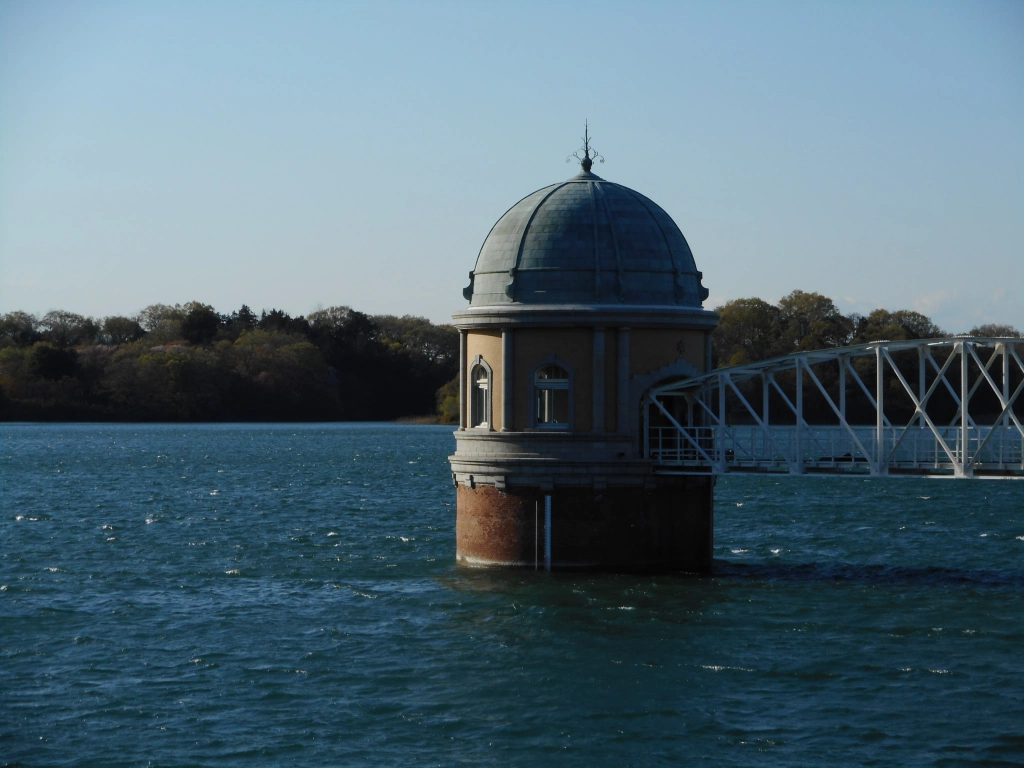
Murayama Dam
A source of supply in Tokyo area
Higashiyamato, Tokyo
2018

To Winter RI Ko. 14 John Peabody Harrington, Roman Jakobson, FUKAYA Kenji, Maxim Kontsevich, ZHANG BInglin and Roger Penrose 14 Description of Language. 2015. Translated by Google translate 2020


To Winter RI Ko. 14 John Peabody Harrington, Roman Jakobson, FUKAYA Kenji, Maxim Kontsevich, ZHANG BInglin and Roger Penrose 14 Description of Language. 2015. Translated by Google translate 2020


05/05/2020 18:29


To Winter RI Ko 2015
14  John Peabody Harrington, Roman Jakobson, FUKAYA Kenji, Maxim Kontsevich, ZHANG BInglin and Roger Penrose

From author:This text’s translation by Google translate is a little hard to be accurate at the present, especially on mathematical explanation by usual writing.

You can see the whole city from the library on the hill. The east side of the third floor is a computer room. The internet was always connected there, and I could use any table freely. I often spend my holidays near the window. A group of tall blue-green buildings rises to the northeast of the left side of the window. Seen from here on the hill, it is much higher. Only there is towering above the sky. Immediately south, there should be A’s home. Did the bulbul hit a tall building like that? The glass walls were distant and dull, reflecting the light of the autumn afternoon. 

When I was cleaning the room where the birds were gone for the first time in a while, I found some furrowed flock in the corner. The soft wings floated in the air for a while when released. Have you lived in the city because of your childhood? I wished that I was now resting slowly in the grove of the hills. A created Web pages and Dreamweaver, but since the amount has gradually increased, I switched to Expression Web from the middle. I used Office for documents at first, but soon I switched to Zoho.

In this way, I was able to quickly write small mathematical expressions using LaTex. When Backup was run automatically using SugarSync, all traces of A were on Cloud. The document was written in English. Regular sentences other than mathematical expressions are relatively easy to write with a limited vocabulary. This could lead to someone seeing somewhere. I had little hope, but there was little response. 

Of course, I thought it would be nice if there could be one or two people in this wide world who could sympathize with me, but that didn’t bother me that much. I just keep writing. There is no guarantee that there will be someone like John Pepody Harrington, who continued to record the American Indian languages. 1920 The photographs in the Smithsonian Institution’s collection, which are doing field research around the year, look somewhat like the pioneers of the West. It’s okay to wait quietly for the future of Harrington in the corner of the city. 

It was a fun task to think of a language containing time as a possibility using a model. However, in reality, it is rarely something that can be created, such as an original one. I couldn’t exceed the conventional idea. He arranged the work procedure little by little. First create a simple model. Select the shape suitable for the model. How much is the figure written? 

According to Kenji Fukaya, the geometry was “a group of groups and the space in which it acts”. It was Fukaya’s charm that he was able to briefly confirm and look at the fundamental things. By referring to Jacobson’s “semantic minimum”, a new geometric “minimum of meaning” is set, and the time t is included as a meaning by moving the time t in the closed interval. Defined the geometric word.

I repeated this direction many times with different levels of geometry. The universality of language was thought to be closely related to the invariant of mathematics. In Fukaya’s book, I learned that the quantum cohomology ring can be obtained from the Gromov-Witten invariant and the Gromov-Witten potential can be obtained. Language approached mathematics and physics. It has become possible to logically check the symmetry that has long been a concern. Under certain assumptions, the character of various languages can be inspected as a model from, for example, one figure or manifold. One of the centers was homological mirror symmetry, which was proposed by Kontsevich.

When I got tired of working in the library, I went out to the rooftop. The city, which spreads under the dark maroon autumn sky, conveyed the grandeur of human activities. The sounds of distant cities echo like a chord. Are people flying in this city as birds are flying in the sky? Just as birds sometimes crash into the ground by colliding with the turquoise glass of tall buildings, will people crash into the ground and crash somewhere?

 I once read a story about birds in the book Shorin no Fubun. “According to the poem of the 3rd year of the Emperor Hansho, a bird of five colors, it passes over the prefectures in which it belongs.” It seems that 10,000 birds of five colors flew in the sky. As for the beginning, I continue to cite Chinese books. According to the poem’s third year of honor, he gathered New Year’s lords, Otori, Emperor and Kanro to the Kyoto teacher, and according to the flock of birds, the findings of the Han book were true.

The contents of this Chinese book, in which 10,000 birds gathered in search of it, are true. It is unknown whether Shorin believed in these statements. However, according to Shorin’s habit, he might have believed it as a natural thing. 

Autumn flowers were dancing in the strolling garden on the roof of the library. White autumn Ming chrysanthemum, yellow Maru chrysanthemum, Nozoku chrysanthemum Soothing Hottogigisu and the white and white Arissum flowers crawling on the ground. Sky blue salvia, red cherry sage, purple rosemary and light blue basil. Dark blue Saintpaulia, white sapphinia, crimson geranium bowls and hanging. Huquera, Drachina consenna, Sansevieria houseplant. Spatti is also rich in green, and the red sea urchin is already red. Various sasanqua that began to inflate the buds, the last cosmos flowers that sway in the wind Winter clematis that has been quite tall, large leaves on the grape rack with few remaining, and a large red or white large ball swaying occasionally in the strong wind . 

If you look closely, you can also see the pink bokeh flowers that change the season. Shala beautifully turns red, and dogwood turns the leaves brown. On the other hand, rhododendrons had already inflated the buds considerably. Autumn was getting deeper. 

You can hear the sound of the city line riding on the wind. How is K doing? Well, let’s make a dedication to the document. For familiar days with K. I continued to write documents when I got home. The linguistic space including time gradually expanded from a straight line to a plane and from there to a sphere. Attracted by the work of Roger Penrose, I made a projective model. 

As I was thinking about it at midnight, I thought it would be beautiful if the language danced in the sky like an aurora. A complex plane is created by mapping all complex numbers to planes, as if all real numbers were mapped to straight lines. A complex number defined by two real numbers is placed on the plane as a language unit, and it is called a language point. Establish a vertical third coordinate axis from the origin of the plane and make a sphere with a unit radius centered on the origin. The spheres intersect at a radius of 1 on the new coordinate axes. If that point and a linguistic point on the complex plane are connected by a straight line, when the linguistic point has a distance of 1 or more, it intersects with the sphere at one point. When the distance is less than 1, the linguistic point is inside the sphere and does not intersect the sphere. 

This shows the limits of the language. Ordinary language points are projected on the spherical sky when the distance exceeds 1. The projection is called aurora. Language points at infinity converge on a sphere on the Z axis. You can capture an infinite number of languages in a finite way. A straight line connecting two points on the complex plane draws an arc in the spherical sky. The two straight lines form two arcs in the sky, and connecting four points creates a distorted quadrilateral in the sky. 

If we model the points in the sky as words, arcs as sentences, and quadrilaterals as sentences, the language will emerge there. The language becomes Aurora and dances in the sky. Language is aurora dancing above us.


Read more: https://geometrization-language.webnode.com/news/to-winter-ri-ko-14-john-peabody-harrington-roman-jakobson-fukaya-kenji-maxim-kontsevich-zhang-binglin-and-roger-penrose-14-description-of-language-2015-translated-by-google-translate-2020/

Monday, 24 January 2022

Sekinan Table: To Winter 2 Print. Author RI Ko. 2015. Translated by Google 2020

Sekinan Table: To Winter 2 Print. Author RI Ko. 2015. Translated ...:   

Story. To Winter. 2 Print. Author RI Ko. 2015 2 Print -How is your current job? In response to the autumn light, I asks. -I don't know...


Sunday, 23 January 2022

Thursday, 20 January 2022

Glitter of youth through philosophy and mathematics in 1970s

 Glitter of youth through philosophy and mathematics in 1970s


TANAKA Akio


In 1970s at Tokyo or in age 20s, there surely exists glitter of youth in my life, now I remember.


In those days, in Japan many fabulous magazines were successively published. Episteme,Toshi(City)、Chugoku(China) and the likes. Especially I loved reading Episteme which had printed many philosophical or philological articles as the form of special issues concentrated important philosopher, thinker and writer. The chief editor of Episteme was NAKANO Mikitaka(1943-2007), probably one of the best editors in the latter half of the 20th century in Japan.  The most impressive number was Ludwig Wittgenstein(1889-1951), probably in 1977. Also influenced from the issue of Kurt Gödel(1906-1978)who gave me the possibility of set theory and its application.


In my life, Wittgenstein gave the big influence for thinking and writing style, never entering or approaching his essential philosophical themes.After millennium year when I started the regular writing on language universals, my writing style was at first rather resembling in his Tractatus Logico-Philosophicus. My paper written in 2003, Quantum Theory for Language shows a very imitative style to him. This tendency kept on for some time till I changed to adopt algebraic method for  clearer description to the themes.


1970s was a relatively calm time after those university’s revolution in the late 1960s in which I was also compellingly rolled in. In those days I time to time had wandered between library and old book shops seraching my life-time true themes cowardly avoiding the turmoils of university and towns. Blaise Pascal(1623-1662)’s Pansees was my favourite one. One day at Kanda’s Taiwan Chinese book shop Haifeng Shudian, I bought WANG Guowei(1877-1927)’s Guantangjilin that clearly opened the new frontier for classical Chinese philology along  mainly streamed by Small Study, traditional restrict linguistics in China. Influenced WANG Guowei I trlally wrote a paper titled On Time Property Inherent in Characters, 2003 by which I began the later start of language study.


In 1970s, I had cherished a dream in which I wanted to use mathematical description and get the essential of language. But I had not any ability to proceed the study for it while I read at random mathematical books. One day I found and bought the amount Nicolas Bourbaki(1935-)’s text books at old book shop in Kanda, Tokyo. They were hard to continue reading for my talent in those days. After all, the books were put aside the desk. The only remaining in my mind was adoration to Bourbaki and their brilliant achievement. My return to Bourbaki was long after in 1990s when I again tried the pursuit of language having a clear vision to study language universals according to the Linguistic Circle of Prague, especially aiming to resolve the supposition presented by Sergej Karcevskij(1884-1955).


Turning round the past days, my way was always narrow and winding. But it has been kept till now not breaking off in any situations. The way was almost always glittering in my youth days in spite of under the cloudy skies. Probably I have walked happily till now being assisted by many people especially at the field of language, mathematics and the relevant studies.

At random now I remember the dear names, but from whom I  never cannot hear their voices. HASEGAWA Hiroshi, CHEN Donghai both Chinese language, KAJIMURA Hideki, CHO Shokichi both Korean language, Natary Muravijowa Russian language, ONO Shinobu Chinese literature, MIIYAZAKI Kenzo, FURUTA Hiromu, KONDO Tadayoshi all three Japanese literature, ANDO Tsuguo French poem, SAEKI Shoichi Haiku, IKEDA Hiroshi Japanese classical drama, SAITO Kohei sculpture, YAMAGISHI Tokuhei bibliography, NISHI Junzo Chinese philosophy, KAWASAKI Tsuneyuki Buddhism, CHINO Eiichi Russian language, the Linguistic Circle of Prague. At last dear friend of high school days KANEKO Yutaka mathematics and our youth.


Tokyo

6 March 2015

Sekinan Library

24 March 2018 Text revised and link added
SRFL Math


Read more: https://srflnote.webnode.com/news/glitter-of-youth-through-philosophy-and-mathematics-in-1970s1/?utm_source=copy&utm_medium=paste&utm_campaign=copypaste&utm_content=https%3A%2F%2Fsrflnote.webnode.com%2Fnews%2Fglitter-of-youth-through-philosophy-and-mathematics-in-1970s1%2F